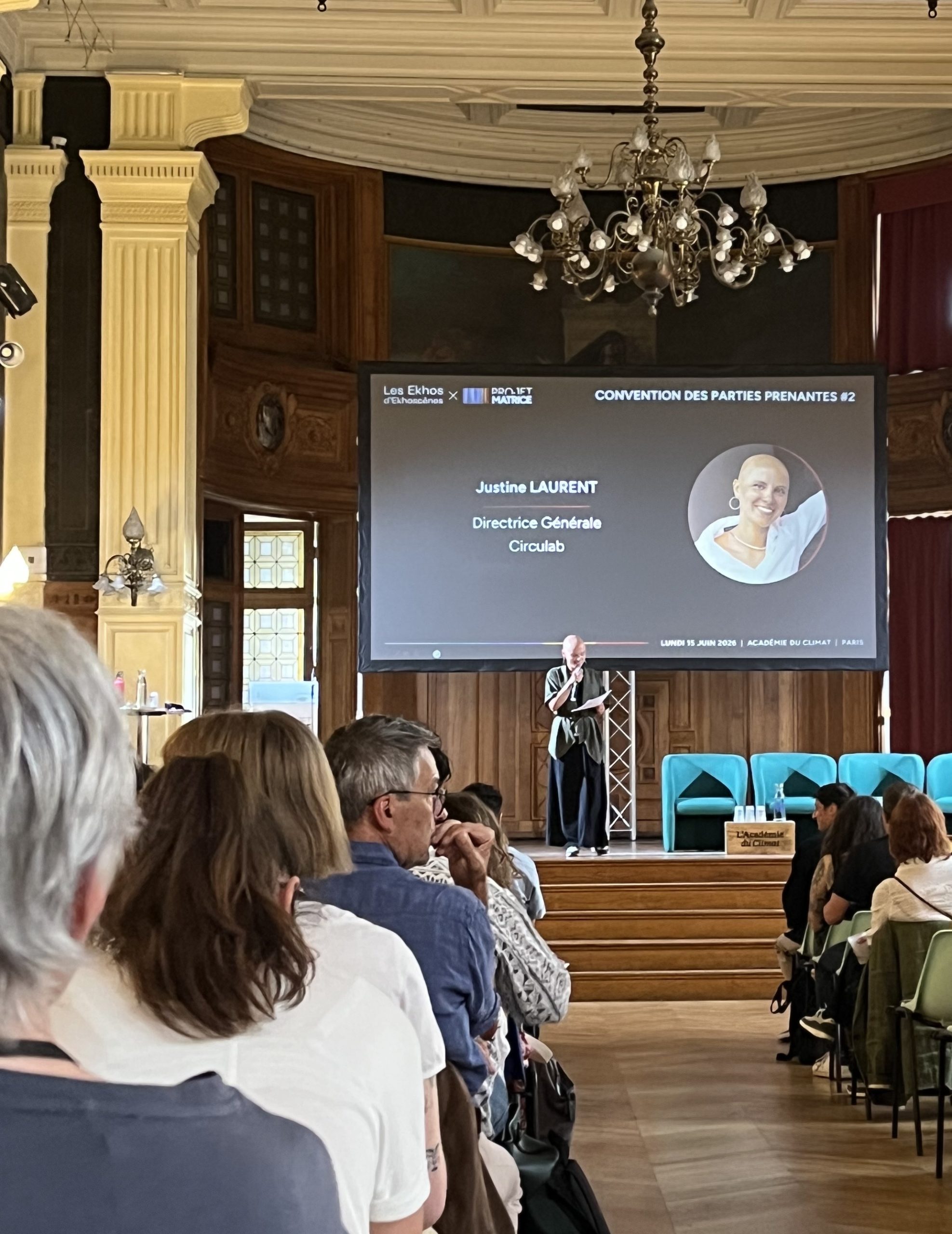
On 15 June 2026, the Académie du Climat in Paris hosted the 3rd edition of Les Ekhos d’Ekhoscènes, which this year was integrated into the second stakeholders’ convention of the M.A.T.R.I.C.E. project1.
Ekhoscènes is the national union for the private live performance sector, bringing together more than 500 organizations (producers, venues, theatres, promoters, festivals, cabarets, etc.). Les Ekhos is a series of discussions launched by the organization to bring together industry stakeholders and decision-makers around major social and societal issues affecting live performance. Following a first edition focused on work and employment, and a second on the future of live performance, this third edition is fully aligned with the M.A.T.R.I.C.E. project, a programme launched in 2024 to collectively rethink production methods.
It was a busy day bringing together industry professionals, public institutions, researchers, and innovation stakeholders. Circulab participated in the event by helping with the organization, facilitating workshops, and encouraging discussions.
The programme included collaborative workshops, a forward-looking panel discussion on the transformation of live performance and its audiences, data from new studies on contemporary music tours (including a survey conducted with the Harris Institute), and feedback from experimental projects led by various actors in the sector. The event also provided an opportunity to continue work initiated during the first convention on topics such as mobility, energy, local integration, and new production models.
Among the highlights was a series of pitches showcasing practical solutions already being tested in the field. It is these initiatives that we focus on below.
Decarbonizing Equipment Transport
One of the main areas identified through this project is transportation, which represents a significant share of the carbon footprint of live performances. Sets, instruments, technical equipment, and mobile stages generate considerable logistics-related emissions.
To address this challenge, the company LOMAK has developed a multimodal transport solution combining rail and road transport. This approach enables the delivery of all equipment required for productions while significantly reducing greenhouse gas emissions.
Tested at the Avignon Festival since 2024, the system relies on shared freight transport between several theatre companies using rail freight services. According to the project leaders, the initiative has prevented nearly 150,000 kilometres of road transport and reduced associated emissions by up to 95%.
Beyond its environmental benefits, the system also lowers logistics costs through shared transportation and simplifies operations for companies and artists, who no longer need to manage these organizational aspects themselves.
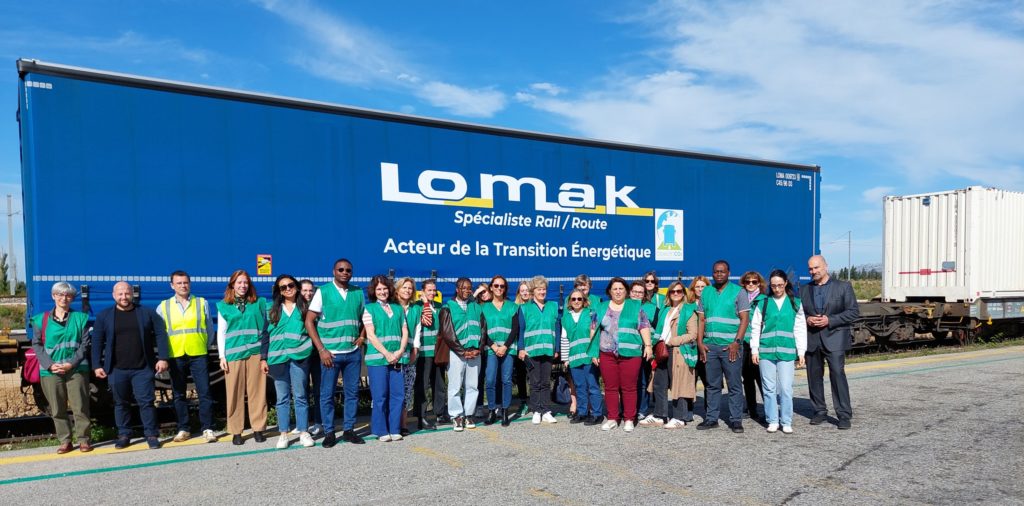
Photo credit : LOMAK.
Une tournée en voilier le long des côtes françaises
This was probably the initiative that generated the most curiosity. The Toulouse-based production company Bleu Citron organized a touring project with French DJ GUTS along the French coastline—by sailboat. The idea emerged from a meeting between the artist and a couple of skippers, with the aim of demonstrating that alternative forms of mobility are possible.
The project came with significant constraints. The route had to be designed with stages limited to around 100 kilometres each, weather conditions had to be taken into account, and an informal discussion event with a local figure involved in sustainability issues was organized before every concert. Despite these challenges, the environmental results speak for themselves: organizers estimate an 83% reduction in CO₂ emissions.
The project leaders were also transparent about its limitations. The format was particularly well suited to GUTS, whose work as a DJ requires relatively little equipment. In addition, the economic model still needs to be strengthened, particularly through partnerships and communication efforts that could improve the financial performance of the project and the tour.
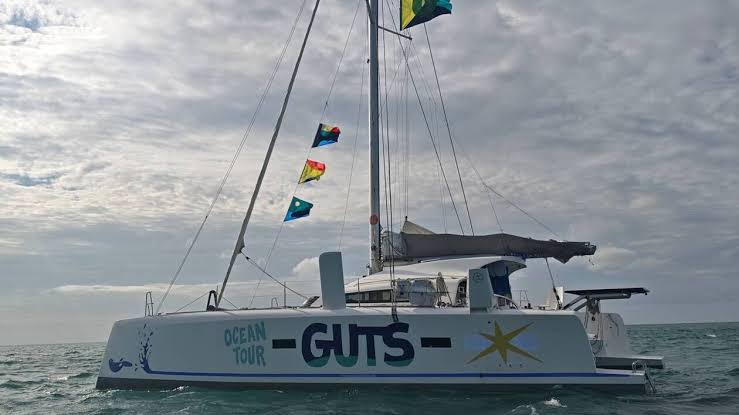
Photo credit : Voiles et Voiliers.
A Label to Recognize Committed Companies
The ecological transition also requires recognition of the efforts already being made. This is the idea behind the Prestadd label, developed by the National Union of Audiovisual, Stage and Event Service Providers (Synpase). Valid for four years, the label aims to identify and promote companies that are genuinely committed to environmental practices.
Three areas are assessed as priorities: transportation and mobility, energy and equipment, and waste management based on circular economy principles. The system is designed to be progressive, beginning with a self-assessment process, and includes a directory of certified organizations. To date, nearly 90 companies have obtained certification.
Reinventing the Sound Experience
Live performances generate such powerful emotions that we sometimes forget a fundamental element: sound quality. Paradoxically, sound levels at events are often well above what our ears can tolerate without damage—to the point where distributing earplugs at concert entrances has become common practice, despite being somewhat contradictory to the experience being offered. It is this observation that led 360 Prod to develop the Soundarium.
This immersive sound system provides a listening experience that is more precise, more enveloping, and less aggressive for the ears. Powered by solar energy with approximately ten hours of autonomy, the system can accommodate up to 500 people, both indoors and outdoors.
However, the ambition of its creators goes far beyond simply improving listening comfort. The Soundarium opens up new possibilities for artistic creation by encouraging musicians to rethink their compositions specifically for this sound environment, fostering genuine musical experimentation. It points toward a new artistic era, with sound distributed within a limited radius of around twenty metres—focused, precise, and perfectly suited to medium-sized cultural events. As such, the technology aligns with a broader vision of local, community-based culture, reflecting growing public expectations.
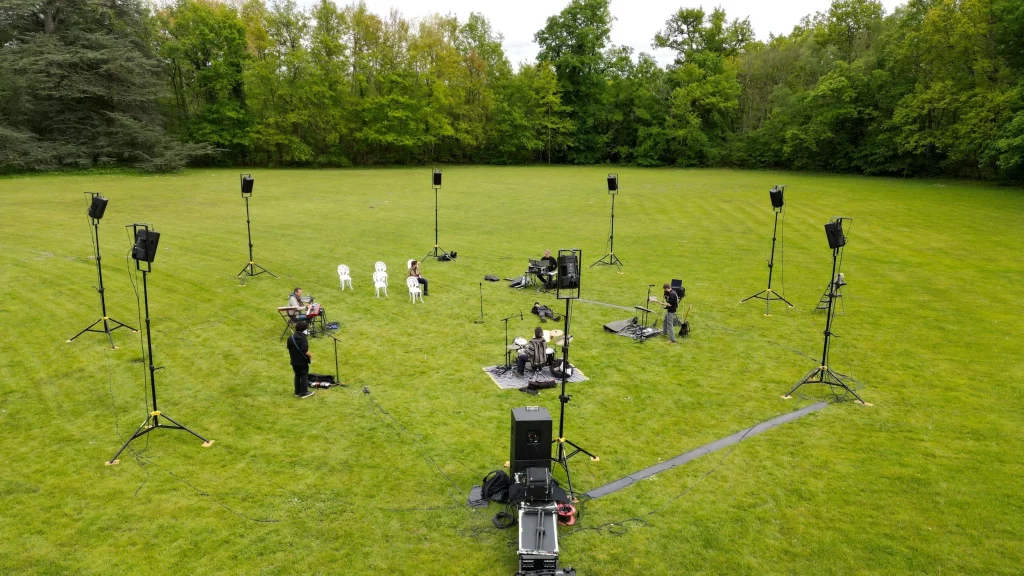
Photo credit : 360 Prod.
Conclusion
Through these various initiatives, the second M.A.T.R.I.C.E. convention highlighted a sector undergoing significant transformation. Between technological innovations, new forms of mobility, and certification initiatives, live performance professionals are increasingly seeking to reconcile artistic creation with environmental responsibility.
To discover more initiatives led by actors in the live performance sector, see our article dedicated to the first M.A.T.R.I.C.E. convention.
You can also continue the discussion on Radio Circulab, available on all major listening platforms.