The Reusable Wine Series – Article 2/3
After meeting Marc Etcheberrigaray, co-founder of Joyons, we this time stepped into Pristine, a vegetarian bistro in Paris’s 9th arrondissement, to speak with its co-founder, Michelle Primc. This second installment of our mini-series on reusable wine packaging takes us inside a restaurant that has embraced sustainable dining from the very beginning and chose to feature Joyons wines on its menu.
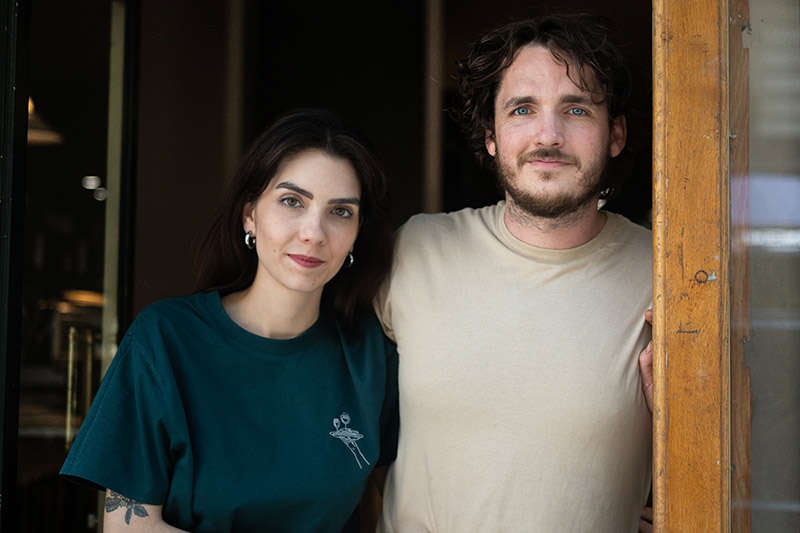
Pristine’s founders, Michelle Primc and Jérémy Grosdidier. Photo credit: Paris Gourmand website.
A restaurant built arround the local product
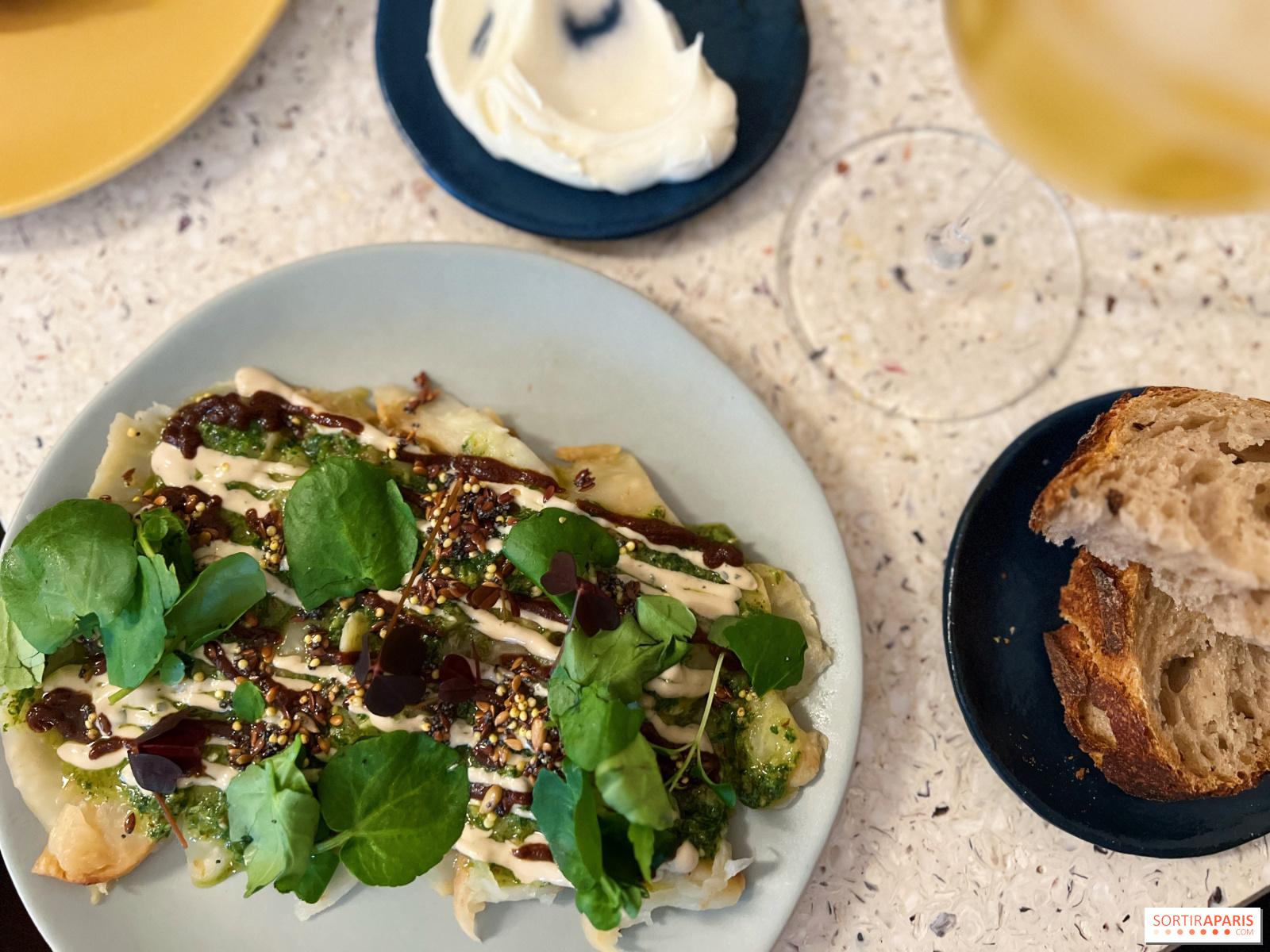
Founded in 2023, Pristine champions vegetarian cuisine based on seasonal ingredients sourced as close as possible to producers. The restaurant prioritizes suppliers from the Île-de-France region whenever possible and works directly with them to ensure product quality while reducing the number of intermediaries.
However, for Michelle, the restaurant’s identity is not solely defined by vegetarianism. Above all, the goal is to offer food that is delicious, joyful, and accessible. In fact, most of Pristine’s customers are not vegetarians; they come primarily for the quality of the dining experience. This also reflects a broader shift in attitudes toward food (and environmental) transitions: they are no longer seen merely as a form of restriction, but increasingly—and above all—as a source of pleasure.
Le vin, un angle mort de la réduction des déchets
While Pristine had already implemented several practices aimed at reducing its environmental impact, wine remained a more complex issue. Unlike vegetables and certain food products delivered in reusable containers, wine bottles generate a significant amount of waste. It was in this context that Michelle discovered Joyons and its reuse-based model.
The concept developed by Joyons immediately addressed one of the restaurant’s challenges: continuing to offer quality wines while reducing the environmental impact associated with packaging. Beyond its ecological benefits, Michelle was also drawn to the initiative for its economic and social coherence. It allows winemakers to create value from their production in a different way while providing restaurateurs with accessible and fully traceable wines.
Today, Pristine primarily uses Joyons wines for its by-the-glass offering. With a consumption rate of around four cases per week, nearly 48 bottles are reused rather than discarded after a single use. This represents approximately 24 kilograms of glass saved each week, or more than 1.2 metric tons of glass per year.
Easier to implement than it may seem
The main challenge Michelle initially identified was storing empty bottles, given the limited space available—a well-known issue for Parisian restaurants. In practice, however, this difficulty was quickly resolved thanks to the logistics system provided by Joyons. Every week, the empty bottles are collected during deliveries, requiring no additional handling or transportation from the restaurant staff.
As a result, the deposit-return system integrates naturally into the restaurant’s daily operations and creates very few operational constraints.
Curious and receptive customers
When adopting these reusable bottles, Michelle initially worried that some customers might associate the deposit-return system with a lower-quality offering or perceive it as a downgrade. The reality proved quite different. Feedback has been overwhelmingly positive, marked by curiosity, enthusiasm, and sometimes even meaningful conversations in the dining room.
For Michelle, it all comes down to how the concept is presented:
“It depends on the way you advocate for it; if you do so in a truly virtuous, joyful, and passionate way, it always makes people more interested.”
Furthermore, for the restaurant’s regular customers, the Joyons model offers another advantage: the frequent rotation of wine selections made possible through collaboration with different winemakers allows guests to discover and taste a variety of wines over successive visits to Pristine.
Going further
› This article is part of a short series of articles and podcasts dedicated to reusable wine packaging. After exploring the operational side of the sector through bottle management with Joyons, this second installment dives into the challenges of sustainable dining. In the third and final episode, we will meet producers who have embraced the reuse model to better understand the opportunities and challenges of this practice at the winery level.
If you would like to continue the conversation and learn more about initiatives led by circular economy stakeholders, tune in to Radio Circulab, available on all major listening platforms.