A look back at the discussion between the Circulab team and Cédric Carles, founder of the Atelier 21 association.
At a time when the ecological transition is becoming an absolute necessity, the question that remains — especially among industry stakeholders — is how to get everyone on board. For over 15 years, Atelier 21 has been exploring this issue through projects dedicated to the energy transition and practical ecology. Guided by a design approach that is both educational and practical, the team is committed to sharing its knowledge to collectively envision a more sustainable future.
A diverse ecosystem of researchers, engineers, historians, and energy experts revolves around Cédric Carles. They all share a strong conviction: the transition can only succeed if it involves everyone, step by step. This philosophy guides all of Atelier 21’s projects; everything is designed to be educational, ensuring that innovation and the popularization of energy alternatives remain accessible and collective.
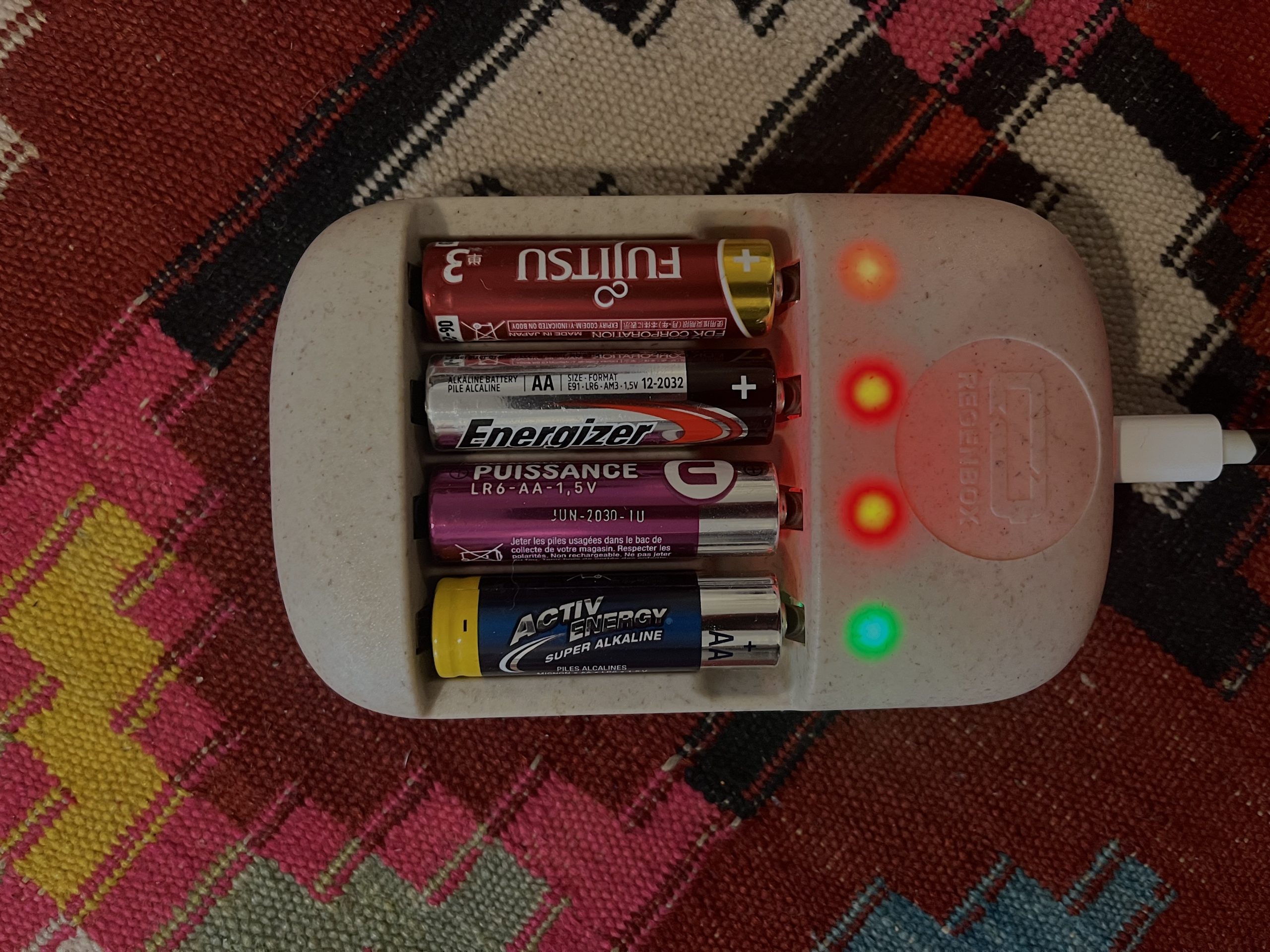
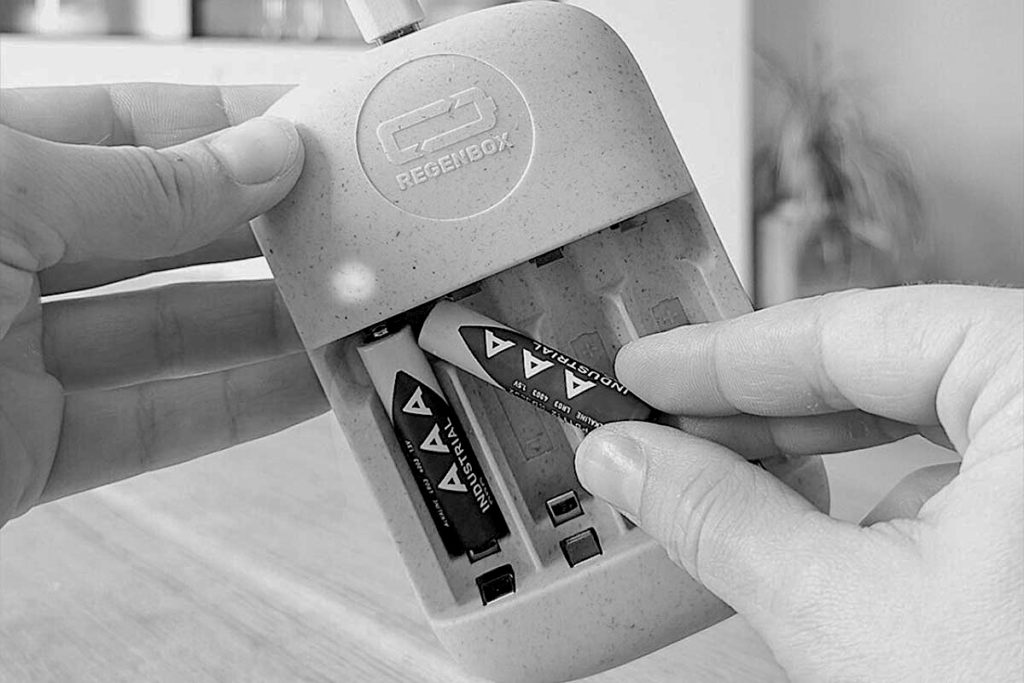
The solution for reusing alkaline batteries with the RegenBox
Among the issues Atelier 21 is addressing, energy storage plays a central role. While we now know how to generate electricity (particularly from renewable sources), successfully storing it and using it at the right time remains a real challenge.
The example of batteries is quite telling, especially given the enormous deposit we have: every year, nearly one billion batteries are thrown away in France, including about 700 million alkaline batteries. And yet, a large portion of these batteries could still be used. According to observations by Atelier 21, up to two-thirds of discarded batteries actually have no business ending up in recycling bins, as they are still functional or repairable — sometimes due to a simple technical defect.
This observation gave rise to the RegenBox project. Its principle is simple: to diagnose and regenerate alkaline batteries, including those labeled “non-rechargeable.” Without claiming to make them last forever, the goal is to extend their lifespan as much as possible, preventing their premature disposal.
Today, the solutions developed by Atelier 21 already save approximately 100,000 batteries per year, with a stated goal of reaching 2 million in the medium term. At a rate of about 145 grams of CO₂ per alkaline battery (AA), this innovation could prevent the emission of nearly 290 tons of CO₂ per year in the long run!
The Solar Sound System : learning through experience
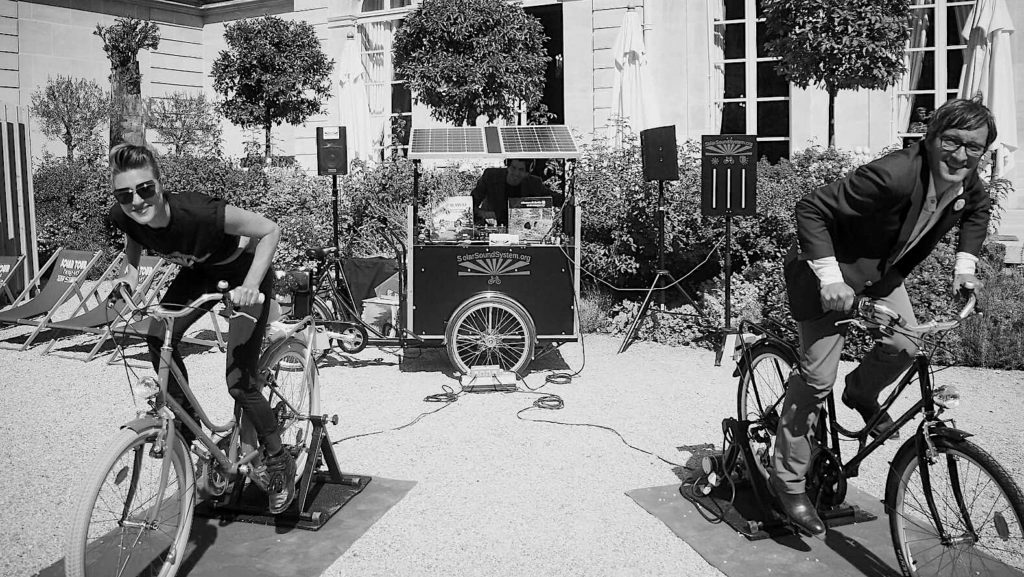
Long before the RegenBox, Cédric Carles was already exploring innovative educational formats through the Solar Sound System. Developed during his early years of involvement in community education, this system is a sound setup powered by solar energy… and human energy, thanks to bicycle-powered generators.
Pioneers in their field, these self-contained systems can power outdoor events for groups ranging from 50 to 500 people. Building on the success of over 1,000 activist and festive events, this project perfectly illustrates Atelier 21’s ability to make energy issues visible, understandable, and engaging.
Reviving forgotten solutions
Beyond innovation, Atelier 21 is also committed to research and cultural transmission.
Since 2015, the participatory “Paleo-Energy” program has been exploring patents that have entered the public domain. The goal is to analyze these inventions, understand their principles, and adapt them to today’s challenges. It’s a way of reminding us that certain solutions already exist — we just need to rediscover them…
This initiative extends to the Rétro Futur Museum, which catalogs and highlights forgotten energy innovations while placing them in dialogue with contemporary creations from the worlds of design, engineering, and art.
More than just a preservation effort, this approach opens new avenues for research and innovation. Above all, it demonstrates that the transition relies not only on novel technologies, but also on the revival of knowledge and practices — all of which are essential levers for addressing today’s challenges of resource efficiency, circularity, and collective ownership.
Conclusion
Despite some lingering obstacles and resistance, Cédric Carles remains optimistic. Things are changing, including among companies, as more and more of them are becoming aware of the limitations of the current model.
He even envisions, in the long term, the creation of a public energy storage observatory capable of independently evaluating technologies — an equivalent of the “60 Millions de consommateurs” focused on batteries.
In the meantime, he emphasizes two things: patience and outreach. Although ideas take time to emerge, secure funding, and gain traction, he believes they always eventually emerge and spread — provided, of course, that we talk about them with those around us, and not just with those who are already convinced!
Learn more
To listen to the full conversation between Justine and Cédric, check out Radio Circulab’s podcast Activer l’économie circulaire, available on all streaming platforms!
If you’re interested in the topic and would like to explore it further, feel free to visit the Atelier 21 website and check out their book Rétro futur, une autre histoire des innovations énergétiques (Retro-futurism: An Alternative History of Energy Innovations), published by Buchet-Chastel.